|
Dear Colleagues,
Earlier this summer, my two teenagers got ahead of me and took a wrong turn. We were on a difficult hike in a National Park and I knew they would need help to find their way out of the woods. We were out of cell-phone range, so I began making notes and posting them next to trail-markers. I knew that they knew to look for trail-markers, so I put additional guidance where they would look. I also left water and energy bars to keep them fueled. Then, at a crucial moment, as I was hustling to the next spot to leave a note and supplies, I found them coming toward me on the trail. It turns out, they had not yet found my notes, but my daughter had been using her smart watch to track the hike and was using its GPS to re-trace their steps.
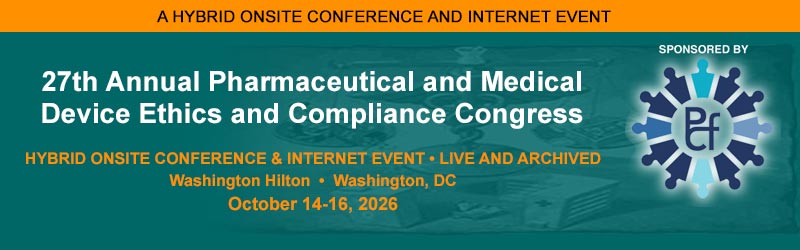
As I was reviewing the agenda just now for this year's Pharmaceutical & Medical Device Ethics & Compliance Congress, October 13-16 in Washington, DC, this incident came to mind. I thought about how Compliance Programs have evolved from creating guidebooks for our teams to study in advance toward compliance "along the path" of customer-facing work — just-in-time guidance, readily accessible for use, to guide appropriate conduct in the moment. We have tried to anticipate where our teams will look and put additional guidance there. And then, I thought about how even that may not be enough. As our teams increasingly rely on AI, data, and other digital tools, we are challenged to embed guidance in their steps and in the devices they use, not just along the path. And that is how discussions about AI are being planned for the Pharma Congress.
AI isn't being treated as a standalone topic on the agenda, separate from old-school tactics. Instead, it is woven throughout the Congress discussions of governance, monitoring, investigations, risk management, and the evolving role of the compliance function as we remain integral to the design and execution of our industry's life-changing work. Importantly, these conversations will focus not only on where AI is headed, but on what peer organizations are learning as they begin putting these practices into tools.
One of the strengths of the Congress is the opportunity to hear directly from compliance professionals who are confronting these questions within their own organizations. Sharing what's working, where the challenges remain, and how approaches are evolving allows all of us to learn from one another as this technology continues to develop.
For 27 years, the Congress has brought together industry leaders, government officials, legal experts, and other thought leaders to examine the issues shaping our profession. AI may be one of the most significant changes we've encountered, and I believe compliance has an important role to play in helping our organizations find their way and avoid wrong turns.
I hope you'll join us in Washington this October and be part of the conversation.
I look forward to seeing you there.
Very best,

Daryl Kreml, JD
Vice President, Head of Ethics & Compliance, Global Oncology, Takeda
Pharmaceutical Compliance Forum Board Member
|